
Radium Atomic Number

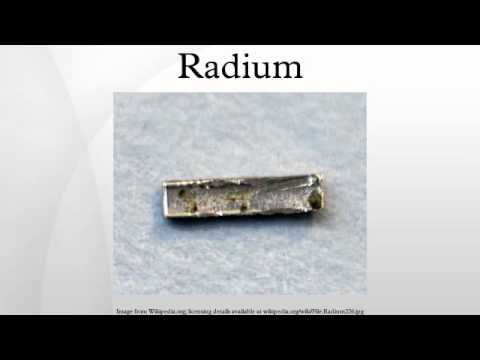
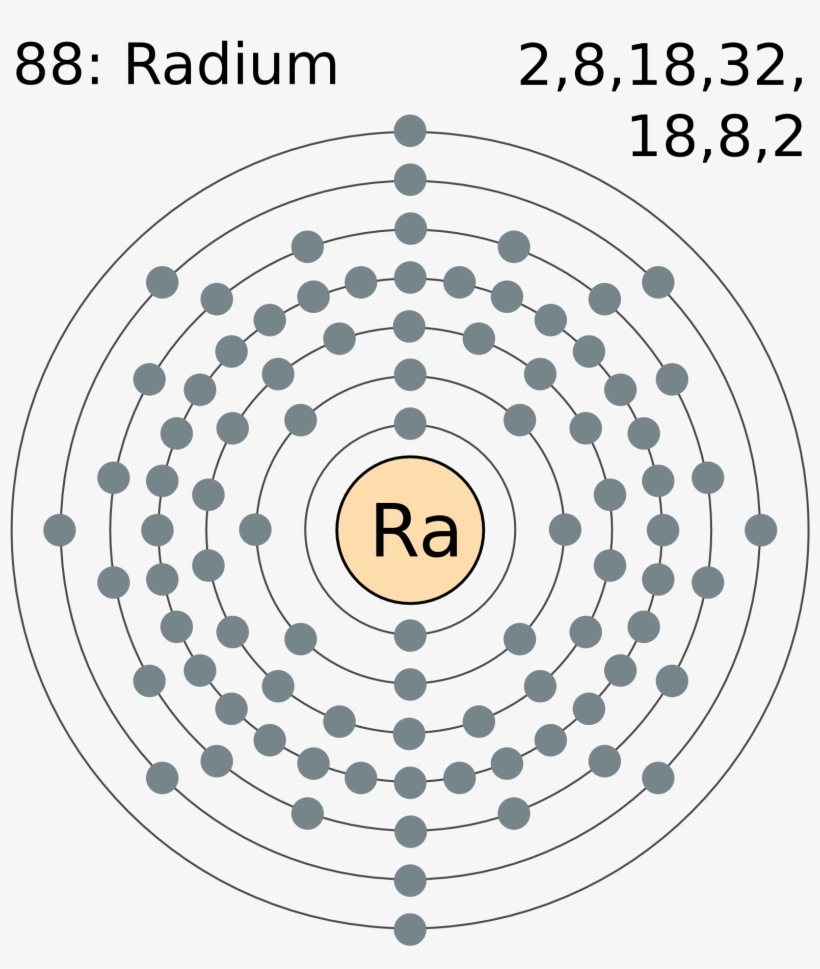
Radium, radioactive chemical element, the heaviest of the alkaline-earth metals of the periodic table. Radium is a silvery white metal that does not occur free in nature. Its most characteristic property is its intense radioactivity, which causes compounds of the element to display a faint bluish glow in the dark. Radium (atomic number 88) has similar properties to barium and is also in the Group 2 category. However, radium is a radioactive element and is generally under the category of radioisotopes in addition to being an alkaline earth metal, because it is not a stable element. The Group 2 elements tend to be less reactive than their Group 1 counterparts. Atomic Number of Radium Radium is a chemical element with atomic number 88 which means there are 88 protons and 88 electrons in the atomic structure. The chemical symbol for Radium is Ra. The atom consist of a small but massive nucleus surrounded by a cloud of rapidly moving electrons. Radium (Ra) is a silvery-white colored metal that has the atomic number 88 in the periodic table. It is an Alkaline earth Metal with the symbol Ra and is located in Group 2 of the periodic table. Radium was discovered by Pierre and Marie Curie in 1898 in the ore Pitchblende after.
Learning Objectives
- List the alkaline earth elements.
- Give the electron configuration of this group.
- Describe reaction of the alkaline earth elements.
How are oyster shells and chemistry related?
We take a lot of chemistry for granted. Very few of us think about the chemistry of bone or oyster shells. Both of these materials have large amounts of calcium compounds in them and play important roles in maintaining the structure of the organism. The shell provides a solid surrounding for the oyster. Bones give support to the body so the person can move around and not just be a soft mass of tissue.
Group 2 elements are referred to as “ alkaline earth ” metals (tan column below). The name “ alkaline ” comes from the fact that compounds of these elements form basic (pH greater than 7) or alkaline solutions when dissolved in water. If the Group 1 elements all have one electron in their outer orbital, we can predict that the Group 2 elements will have two electrons in that outer shell.
The beryllium atom, the first element of Group 2, has an atomic number of four. The atom has the 1 s shell filled as well as the 2s shell, giving a total of four electrons (1s22s2). Note that there are two electrons in the outer shell, a structure that is characteristic of the Group 2 elements. Barium (atomic number 56) has the same outer shell structure of two electrons in the s orbital, even though the internal electron structure for barium is quite complicated.
Radium (atomic number 88) has similar properties to barium and is also in the Group 2 category. However, radium is a radioactive element and is generally under the category of radioisotopes in addition to being an alkaline earth metal, because it is not a stable element.
The Group 2 elements tend to be less reactive than their Group 1 counterparts. The need to remove two electrons in order for the material to react means more energy is needed for electron removal. However, these elements are reactive enough that they do not exist in their elemental forms in nature, but are present as compounds.
Uses of Alkaline Earth Compounds
Since magnesium burns brightly, it is used in flares and fireworks. Magnesium alloys with aluminum provide light weight and sturdy materials for airplanes, missiles, and rockets. Several antacids use magnesium hydroxide to neutralize excess stomach acid.
Calcium compounds are widely found in limestone, marble, and chalk. Calcium is an important constituent of cement. Other uses include calcium chloride as a deicer and limestone as a white pigment in paints and toothpaste.
Strontium is widely used in fireworks and magnets. Barium compounds can be used in paints, filler for rubber, plastic, and resins, and as a contrast medium for X-rays. Many beryllium compounds are toxic, but these materials have been employed in metal alloys.
Summary
- The alkaline earth elements are in Group 2 of the periodic table.
- These elements each have two s electrons in their outer shell.
- The alkaline earth elements are less reactive than the alkali metals.
Radium Atomic Number And Mass
Practice
Alpha Particle Radium Atomic Number
Use the link below to answer the following questions:
- What color are all the alkaline earth elements?
- In what compounds is magnesium found in nature?
- In what compounds is calcium found in nature?
Review

- Why are these elements known as “alkaline earth” elements?
- How many electrons are in the outer shell of the alkaline earth elements?
- Are the alkaline earth elements more or less reactive than the alkali metals? Explain your answer?
- Is radium usually considered as part of the alkaline earth category in terms of chemistry? Explain your answer.
Glossary
Radium Atomic No
- alkaline: Comes from the fact that compounds of these elements from basic or alkaline solutions when dissolved in water.
- alkaline earth: Group II elements in the periodic table.
- basic: pH greater than 7.
References
- Courtesy of U.S. Marine Corps. Bag of Shells .
- Jossifresco. Skeleton .
- User:Cepheus/Wikimedia Commons, modified by CK-12 Foundation. Periodic Table .
- Ingmar Runge. Barium .